Attorney advertisement by Edwin Aiwazian of Lawyers for Justice, P.C., headquartered at 450 N Brand Blvd, Glendale, CA 91203
Being fired is never easy — especially when it feels sudden, confusing, or undeserved. Many employees walk away asking the same question: was this a lawful termination, or was I fired from my job unfairly?
In California, not every unfair firing is illegal. However, when an employer crosses certain legal lines, a termination may qualify as wrongful termination or unjust termination. Understanding the difference is critical if you believe you were unfairly fired.
Lawful Termination in California: What Employers Are Allowed to Do
California is an at-will employment state. This means that, in most cases, an employer can legally terminate an employee at any time, for almost any reason — or no reason at all — as long as the reason is not illegal.
Examples of lawful termination may include:
- Poor job performance,
- Company restructuring or layoffs,
- Personality conflicts,
- Attendance issues, or
- Business-related changes.
Even if the firing feels unfair, it does not automatically mean it was illegal. However, there are important exceptions. For example, many employees are surprised to learn that in some situations, an employer may legally terminate an employee even after they have given notice. We explain this in more detail in our article, “Can I Be Fired After Giving Notice?”.
What Is Unfair Firing or Wrongful Termination?
An employee may be wrongfully terminated when their employer fires them for a reason that violates state or federal law. When this happens, the termination is no longer lawful — it becomes unjust termination.
California law prohibits employers from engaging in unfair firing practices that are based on retaliation, discrimination, or the violation of protected employee rights. High-profile cases have shown how unlawful terminations can lead to significant legal consequences for employers. Learn more in our article on: 3 Famous California Wrongful Termination Cases You Need to Know About.
For a deeper overview of illegal dismissals, visit our Wrongful Termination practice page.
Signs You May Have Been Fired Unfairly
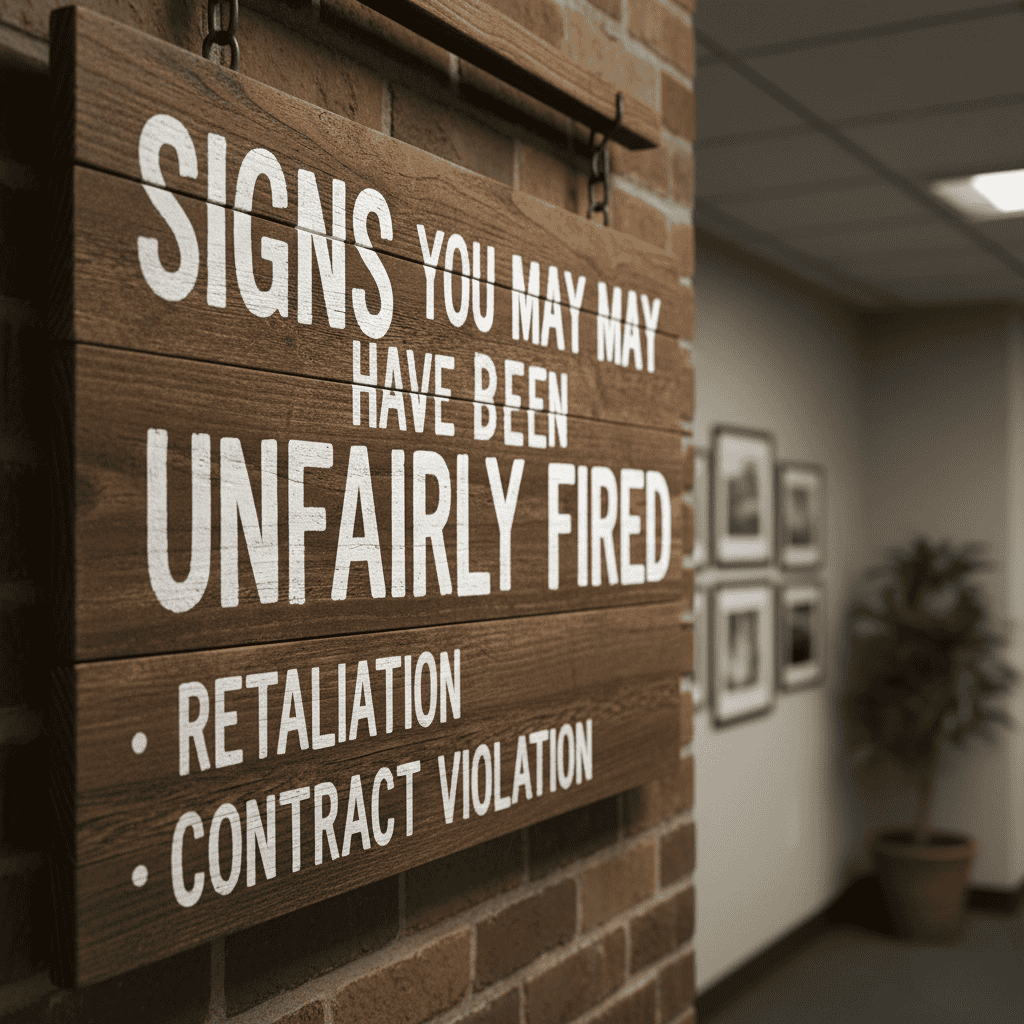
If you were unjustly fired, certain red flags often appear. These may include:
- Being fired shortly after reporting illegal or unethical behavior,
- Termination after requesting medical or family leave,
- Dismissal following a complaint about harassment or discrimination in the workplace,
- Sudden firing after announcing a pregnancy or disability, or
- Being treated differently than similarly situated coworkers.
These situations may indicate wrongful termination, even in an at-will employment state.
Unfair Firing Based on Discrimination or Retaliation

California law strictly prohibits employers from firing employees based on protected characteristics or in retaliation for exercising legal rights.
Protected traits include race, gender, age, religion, disability, pregnancy status, sexual orientation, and other protected traits.
Employees are also protected from retaliation after:
- Reporting unsafe working conditions to Cal/OSHA,
- Filing a wage claim, or
- Participating in a workplace investigation.
Unfair Firing vs. Poor Performance: How Employers Blur the Line

In many wrongful termination cases, employers attempt to justify an illegal firing by claiming poor performance. However, if you had positive reviews, recent promotions, or no prior discipline, these claims may be a pretext.
If you suspect your employer is using performance as an excuse to hide an unlawful motive, you may have been fired unfairly.
You can learn more about warning signs in our related article: Spotting Wrongful Termination: 5 Signs You’ve Been Unfairly Fired.
What to Do If You Believe You Were Unjustly Fired
If you believe your termination crossed the line from lawful to illegal, it’s important to act quickly. Preserve emails, performance reviews, text messages, and any documentation related to your firing.
Consulting with an employment attorney can help you determine whether your case qualifies as wrongful termination or unfair firing under California law.
Talk to a California Wrongful Termination Attorney
Being fired from your job unfairly can leave you feeling powerless — but you may have legal options. An experienced employment attorney can evaluate your case and help you understand your rights.
For more than a decade, Lawyers for Justice, P.C. has represented California employees who were unjustly fired. If you believe your termination was unlawful, contact our team today for a free consultation by clicking here. Or, call (818) JUSTICE.
Attorney advertisement by Edwin Aiwazian of Lawyers for Justice, P.C., headquartered at 450 N Brand Blvd, Glendale, CA 91203
Think you deserve justice?
-
 Get a Free Case Evaluation
-
 Retain Service with No Upfront Cost
-
 Get the Justice You Deserve
-
 No Win, No Pay