Attorney advertisement by Edwin Aiwazian of Lawyers for Justice, P.C., headquartered at 450 N Brand Blvd, Glendale, CA 91203
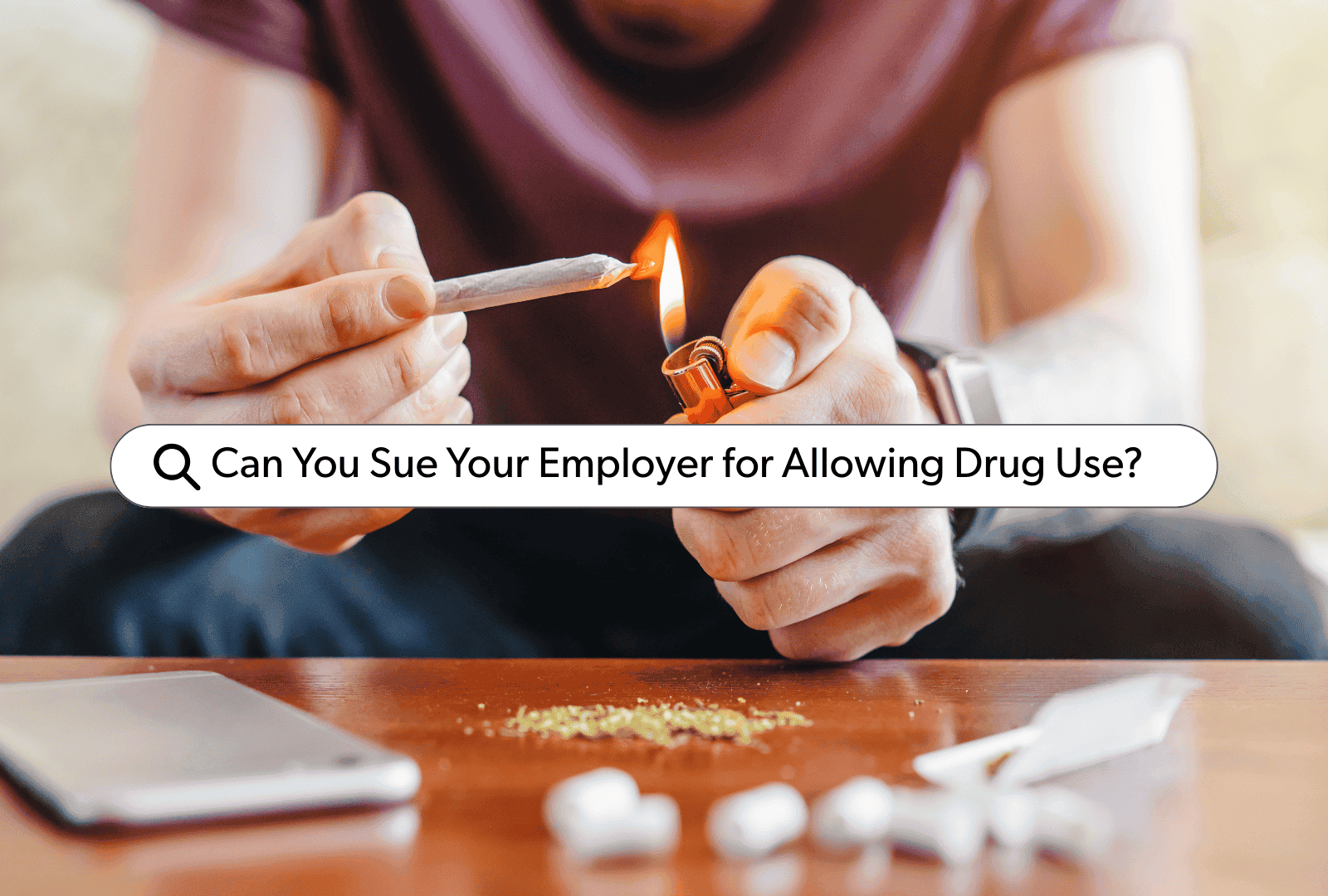
Yes, in some situations, employees can sue their employer for allowing drug use in the workplace, but the right to take legal action depends on specific circumstances. Employers are required to maintain a safe work environment. So when an employer knowingly allows drug use that creates dangerous conditions, ignores safety regulations, or leads to injury or retaliation, they may be held legally responsible. In short, the answer to the question, “can you sue your employer for allowing drug use?”, depends on how the employer responded, what laws apply, and whether their failure to act created unsafe working conditions.
Any employee who is concerned about drug use in the workplace should call (818) JUSTICE for a free consultation.
Laws regarding Alcohol and Drug Use in the Workplace
Drug use in the workplace is governed by a combination of federal regulations, state safety laws, and employment statutes. Employers are expected to maintain safe working conditions, follow drug-free workplace rules when required, and respond appropriately when impairment creates a risk of harm.
Federal safety laws set a baseline duty for employers. Under occupational health and safety regulations, companies must take reasonable steps to prevent hazards that could injure employees. Impairment caused by illegal drugs, alcohol, or the misuse of prescription medication can create a clear safety risk. When an employer knows that an employee is impaired and fails to act, that lack of action can violate safety rules and potentially support a claim.
Employment laws also influence how employers must respond. The Americans with Disabilities Act prevents discrimination against employees who are in recovery from drug or alcohol addiction and are no longer using illegal drugs. To remain compliant, employers must also provide reasonable accommodation for employees recovering, such as time to attend AA meetings. However, the ADA does not shield employees who are currently engaging in illegal drug use. Employers still have the right to prohibit drug use at work, require compliance with drug testing programs, and discipline employees who violate written rules, as long as those rules are applied consistently.
Federal contractors and certain regulated industries must comply with drug-free workplace requirements established by the Substance and Mental Health Services Administration (SAMHSA), which mandate written policies, specific reporting obligations, and formal testing procedures. Employers in transportation, aviation, and similar safety-sensitive fields face stricter standards due to the potential for serious harm if impairment goes unchecked.
When an employer ignores clear signs of impairment or fails to enforce its own drug policy, that failure may constitute negligence, unsafe working conditions, or violations of testing rules. When employers act negligently, an employee may have grounds to recover compensation from their employer.
Workplace Drug Policies
Workplace drug policies exist to protect employee safety, reduce liability, and comply with state and federal regulations.
Many employers have a written set of expectations regarding substance use, testing procedures, disciplinary rules, and the steps a company must take when impairment is reported or suspected. Many employers operate under a zero-tolerance policy, where any employee drug use is met with strict repercussions. When a policy is clear and consistently enforced, it helps prevent safety risks and shows that the employer is taking reasonable measures to maintain a secure work environment.
Most employers have policies that focus on two main goals. First, preventing impairment that could endanger coworkers or the public. Second, ensuring compliance with federal rules that require certain employers to maintain a drug-free workplace. In many industries, particularly transportation, construction, health care, and other safety-sensitive fields, employers must adopt strict drug-free standards to comply with federal law or industry regulations.
A strong policy explains how employees can report suspected impairment, what happens after a report is made, and how the company will conduct investigations or drug testing in a fair and lawful manner. Policies should also address the use of prescription drugs or accommodations for employees in recovery or participating in rehabilitation, since federal laws protect employees who are no longer using illegal drugs and are seeking treatment. As such, an employer’s policy shouldn’t cause undue hardship to employees involved in drug or alcohol rehabilitation programs.
Reporting Drug Use at Work
Any employee who witnesses drug use at work should report it. Start by documenting what they observed. Note the date, time, location, and any behavior that suggested impairment, such as slurred speech, unsteady movement, or the smell of alcohol or drugs. Focus on factual observations rather than personal opinions. Written documentation can become crucial if an employer later claims they were unaware of hazardous conduct.
After documenting the issue, report it to the appropriate department. In many workplaces, there will be a supervisor, a human resources representative, or a designated safety officer to report the drug use and any additional details.
Employees in safety-sensitive industries may also be required to report impairment under federal rules or company policy. In environments where drug use could cause serious harm, an employer is expected to act promptly by investigating the report, initiating drug testing when appropriate, and taking steps to prevent further risk.
If internal reporting fails or if the employee believes the workplace conditions are hazardous, they may file a safety complaint with state or federal authorities. Whistleblower protections can apply when an employee reports unsafe conduct in good faith, including drug use that threatens workplace safety. Retaliation for making a report can itself violate employment laws.
Legality of Drug Testing in the Workplace
Drug testing in the workplace is legal in many situations, but employers must follow specific federal and state rules when deciding when and how to test employees. The goal of any testing program must be tied to workplace safety, regulatory compliance, or a legitimate business necessity. A poorly structured program or a testing process applied inconsistently can expose an employer to legal claims.
Federal law permits drug testing and, in certain industries, requires it. Employers in transportation, aviation, pipeline operations, and other safety-sensitive fields must comply with strict federal testing standards. Drug rules outline when testing is mandatory, how tests must be administered, and what employers must do when impairment is suspected. Outside of regulated industries, testing is generally allowed, but employers still must adopt procedures that respect employee privacy and follow state-specific limitations.
State laws vary widely. Some states allow pre-employment testing without restrictions, while others limit testing to situations where reasonable suspicion exists. Certain states impose requirements on how tests are conducted, including laboratory standards, notice requirements, or rules about confirming positive results. States that have legalized marijuana often place limits on how employers may use marijuana test results, especially when off-duty use is legal under state law. Even so, employers can still prohibit on-duty impairment and may enforce policies that prevent employees from working while under the influence.
Employers with written drug policies must apply them consistently. Testing one employee but not another under similar circumstances could be a sign of discrimination based on a protected class. A valid program typically includes clear expectations, descriptions of when testing may occur, and an explanation of the consequences of refusing or failing a test. Employers are also expected to keep test results confidential and limit access to personnel who need the information for legitimate business reasons.
When Should You Contact an Employment Lawyer
Employees should consider contacting a strong employment law firm like Lawyers for Justice, P.C. when they have reported suspected impairment, and nothing was done. Employees should also seek legal help when they believe the company is retaliating against them for raising concerns or when unsafe conditions are continuing despite repeated warnings.
Legal advice is also important when drug testing is being used unfairly or inconsistently. If the employer is targeting certain employees, failing to follow its own policy, or using test results in a way that violates state or federal law, an attorney can help assess potential violations and next steps.
How an Employment Lawyer Can Help Workplace Substance Abuse
If an employee is working in an environment where drug use is ignored, downplayed, or mishandled by management, they should consider speaking with an employment lawyer. Drug use in the workplace is often a symptom of deeper safety or management failures, and those failures can create legal exposure for the company as well as harm for employees. An employment law firm like Lawyers for Justice, P.C. can help employees navigate a potentially dangerous situation and help fight for compensation if necessary.
Any employee who notices drug use in the workplace should reach out to Lawyers for Justice, P.C. Call (818) JUSTICE for a free consultation.
Attorney advertisement by Edwin Aiwazian of Lawyers for Justice, P.C., headquartered at 450 N Brand Blvd, Glendale, CA 91203
Think you deserve justice?
-
 Get a Free Case Evaluation
-
 Retain Service with No Upfront Cost
-
 Get the Justice You Deserve
-
 No Win, No Pay